
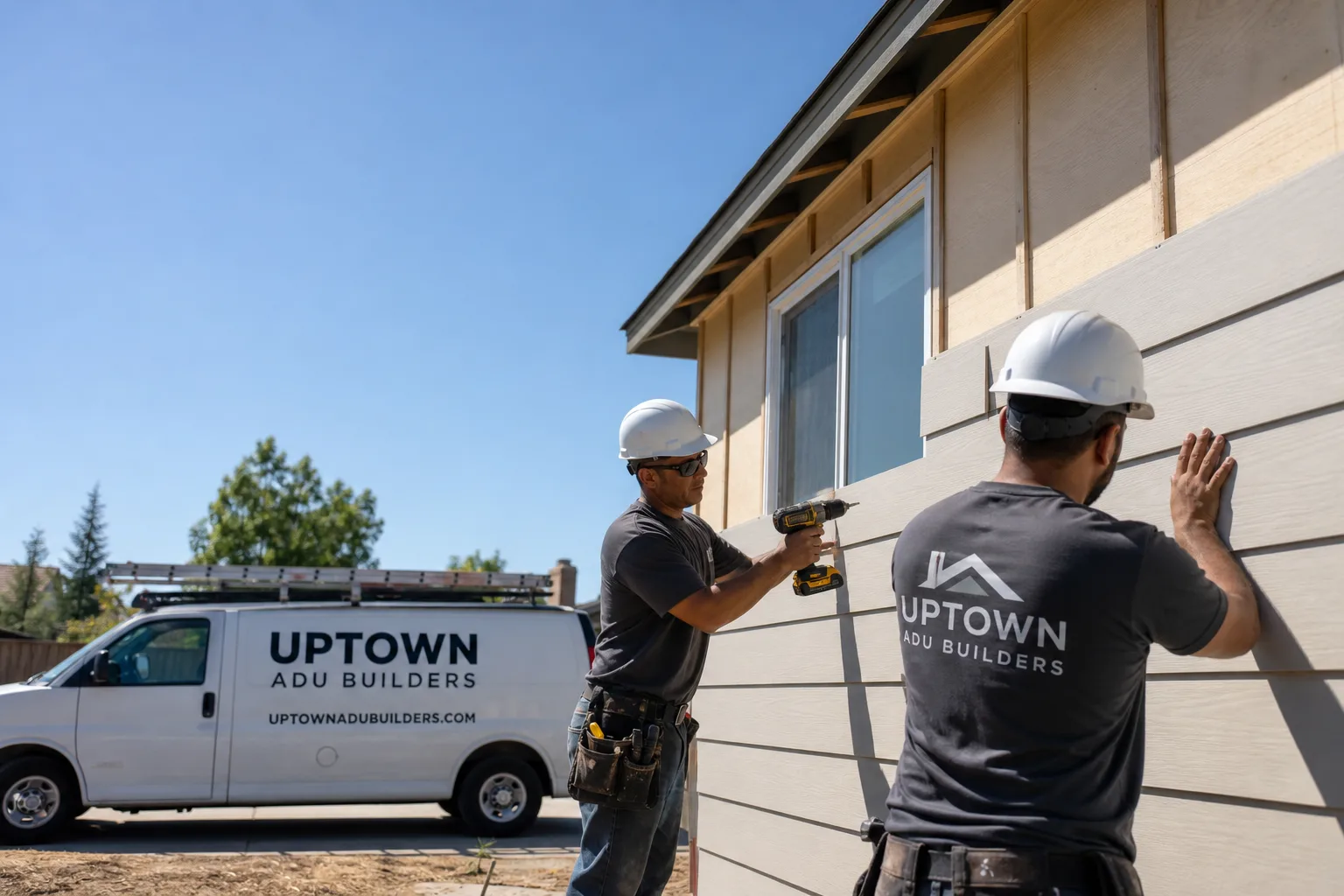
Fast, Reliable ADU Builders Across Highgrove
Building an ADU in Highgrove means working with Riverside County, not a city planning desk. That one fact changes everything: which permits you pull, how long plan review takes, and what surprises surface before a single wall goes up. Uptown ADU Builders has worked the county’s ADU ordinance on mid-century ranch lots across 92313, and we know what it actually takes to get a detached ADU or JADU permitted, built, and finished without a second contractor. If you’re weighing a backyard unit for rental income, a multigenerational suite, or a workspace on a larger Highgrove lot, call (877) 752-4191 and we’ll walk you through the county path first.
Why Uptown ADU Builders Is Highgrove’s Preferred ADU Builders Company
Highgrove is one of the few unincorporated pockets of Riverside County where large lot sizes and older, modest single-family homes create ideal but complicated ADU opportunities. We know the difference between a county permit and a city permit, because here it’s always the county. That’s not a technicality. It means flood-zone checks, septic and well verification, and legalization of existing outbuildings are part of the standard pre-construction review, not a surprise that stalls your project at plan check.
Our ADU Builders team has seen enough Highgrove ranch homes from the 1950s through the 1970s to know what’s behind the drywall before we open it: cloth-wrapped wiring, undersized panels, notched framing, and flat-roof additions that never quite drained right. We inspect before we quote. That’s not a sales tactic; it’s how we keep a fixed price from turning into a moving target half-way through your frame-out. When you call us from Highgrove, you’re talking to someone who has pulled county permits on parcels near the Santa Ana River bottom and knows why grading and drainage matter here as much as square footage.
Alan Drescher leads every project, and every Highgrove ADU we build runs through the same county checklist: legalize first, design second, build third. That order saves months, not days. We also finish interiors in-house, so the kitchen and bathroom inside your new unit are handled by the same crew that set the foundation and framed the walls, no handoff gap to a separate remodeler.
Detached ADU in Highgrove
A detached ADU in Highgrove is the most common path we build, because the county’s ordinance and the area’s older lot pattern work in your favor: many parcels off streets running east of the 215 have enough rear-yard depth to place a unit behind an existing ranch home without touching the main house’s roofline. The permit runs through Riverside County’s ADU ordinance, which often allows larger square footages and streamlined approval compared to neighboring Riverside or Grand Terrace, but it also triggers the flood-zone and un-permitted-structure review that incorporated cities skip.
Utility Independence Comes First
Highgrove’s utility map is patchy. A meaningful share of parcels sit on septic systems or shared wells, which means wastewater and water independence has to be designed from day one rather than discovered at inspection. We verify your parcel’s utility provider before we draw a site plan, because assuming city sewer like your cousin’s place in Grand Terrace will force a redesigned submission after you’ve already spent money on plans.
Site Conditions That Shape the Build
Highgrove sits in a semi-arid inland valley with hot summers and mild winters, so a detached unit needs robust insulation and efficient cooling, plus shading on west-facing walls. The occasional winter rain also makes proper roof drainage and site grading critical, especially on flat or low-slope roofs that are common on older additions out here. We design for both: cooling load first, drainage second.
A detached ADU in Highgrove typically runs $180,000 – $320,000 depending on unit size, foundation type, utility tie-in work, and the condition of what’s already on the parcel. That range assumes a county permit, James Hardie siding, and finish-grade interior work. Call (877) 752-4191 for a line-item estimate on your lot; the walk-through is free.
JADU in Highgrove
A JADU in Highgrove is a junior accessory dwelling unit, typically a conversion of an existing bedroom, attached garage bay, or other space inside the footprint of your current home, rather than a separate structure in the yard. The county allows JADUs up to 500 square feet with a separate entrance, and they’re often the fastest path to legal rental square footage on a Highgrove ranch, because you’re working inside walls that already exist instead of setting a new foundation.
Converting a Garage on a Mid-Century Ranch
Many Highgrove homes were built with attached garages that are wider and deeper than what new subdivisions in Colton or Loma Linda get today. That’s real square footage to work with. But the conversion usually surfaces wiring that hasn’t been touched since the Eisenhower administration. We open the wall, document what’s there, and bring the county inspector in before any repair work, so the panel upgrade and framing fix become part of your approved scope, not a surprise change order.
What a JADU Costs Here
A JADU conversion in Highgrove typically runs $90,000 – $150,000, depending on whether you’re converting a bedroom with an existing bath rough-in or an attached garage that needs a new bathroom, kitchenette, and exterior entrance. The lower end assumes a bedroom-to-JADU conversion with minimal utility moves; the upper end reflects a garage conversion with panel upgrade, insulation retrofit, and new plumbing for a kitchen and bath.
Because a JADU shares walls with your main living space, the sound separation and fire-rating requirements matter. We have built enough attached conversions on Highgrove ranches to know exactly which wall assemblies the county plan reviewer will ask about. Call (877) 752-4191 and we’ll tell you whether your existing bedroom or garage actually qualifies before you spend a dollar on drawings.
Trusted Brands We Service in Highgrove
We’re not married to one prefab manufacturer, because a Highgrove lot with a septic system and a flood-zone designation has different constraints than a flat, city-sewer parcel in Grand Terrace. We work across Abodu, Cover, and Dvele, among others, and match the brand to your lot, budget, and timeline rather than forcing a square peg. For exteriors we specify James Hardie fiber cement on most Highgrove units, because the material holds up against the inland valley’s summer heat and resists moisture intrusion from the winter rains that pool on flat lots near the river bottom. Prefab done right starts with choosing the right prefab, and we’ll tell you honestly which one fits your parcel.
Common ADU Builders Problems We See in Highgrove Homes
- Cloth-wrapped wiring inside mid-century walls: Homes built in the 1950s through early 1970s across Highgrove often still carry original cloth-insulated conductors. The county inspector will flag it the moment a wall is opened for an ADU tie-in, which means a panel upgrade and re-feed become mandatory, not optional.
- Un-permitted outbuildings that stall plan review: Highgrove’s unincorporated status means the county checks for existing structures that were never legalized. If your backyard has an old storage shed or carport addition from a previous owner, the county may require legalization before your ADU permit moves forward.
- Septic and shared-well surprises at siting: A lot on a quiet Highgrove street may look like it has city sewer, but a significant share of parcels rely on septic or shared wells. Designing a unit before confirming utility independence forces a redesigned site plan and often a smaller footprint late in the process.
- Flat-roof additions with drainage failures: Older Highgrove ranches frequently have flat or low-slope roof additions that never shed water properly. If your ADU ties into or sits near one of these, we evaluate the drainage path during inspection, because the county’s flood-zone documentation will ask the same question.
Pricing for ADU Builders in Highgrove, CA
A detached ADU in Highgrove typically lands between $180,000 and $320,000. A JADU conversion runs $90,000 to $150,000. The spread comes from what’s actually on your parcel: panel condition, framing integrity, flood-zone documentation requirements, and whether you’re on city sewer or a septic system with a leach field that limits unit placement. We don’t quote blind. We walk the property, check the county records, and price the real scope. Our contract includes a written allowance for the wiring, framing, and waterproofing upgrades that older Highgrove homes commonly need once walls are open. Any additional work gets priced and approved in writing before we touch it. Call (877) 752-4191 to schedule your free property walk-through and get a line-item estimate built for your specific lot.
We Also Serve Cities Near Highgrove
While Highgrove is the heart of our county-permit work, we also build ADUs for homeowners in Grand Terrace, Colton, Loma Linda, and Rubidoux where city ordinances apply and the permitting path looks different. Our ADU Builders in Highgrove team handles both county and city jurisdictions, and we’ll tell you which one governs your parcel before you commit to anything.
Serving Highgrove, CA — Our Local Coverage Area
We’re based in the Highgrove area and know this community well. Use the map below to see our service coverage — if you’re nearby, we can almost certainly help.
FAQs About ADU Builders in Highgrove
Because Highgrove is unincorporated, there is no city government to issue permits. Your ADU permit runs directly through Riverside County’s ADU ordinance, which often allows larger square footages and streamlined approval compared to neighboring cities like Riverside or Grand Terrace. The trade-off is that county permitting triggers flood-zone checks and legalization of any existing un-permitted structures. We handle that process start to finish, and we’ll tell you what the county will ask for before we submit. Call (877) 752-4191 and we’ll look up your parcel.
Yes, always. A Highgrove ranch from the 1950s through 1970s can hide cloth-wrapped wiring, notched framing, or a flat-roof addition that never drained right. We open walls only after your walk-through, but our inspection includes panel condition, framing sightlines, utility panel data, and drainage evaluation at the lot line. That means the number we quote reflects the real work, not the work we hope is there. Estimates are free; surprises priced in writing are better than surprises billed at the end.
The county will typically require legalization of an un-permitted outbuilding or addition before your ADU permit can be approved. We document the structure, bring the county inspector in early, and write the legalization work into your contract as a line-item allowance. This is routine for Highgrove parcels and it’s exactly the kind of thing that stalls projects when a builder checks it at plan review instead of at the first site visit.
Yes, but the wastewater and water independence has to be designed from day one, not discovered at inspection. A significant share of Highgrove parcels sit on septic or shared wells, which affects unit placement, foundation type, and sometimes the square footage the county will approve without a system upgrade. We verify your parcel’s utility provider before drawing a site plan, and we’ll tell you early if your leach field or well capacity limits what you can build. Call (877) 752-4191 for a parcel check.
Highgrove’s semi-arid inland valley climate means your ADU needs serious insulation, efficient cooling, and shading on west-facing walls to stay livable through July and August. The occasional winter rain, which pools on flat lots near the Santa Ana River bottom and on low-slope roofs common to older ranch additions, means roof drainage and site grading are part of the structural conversation, not an afterthought. We spec higher R-value insulation and Hardie siding on most Highgrove units for exactly this reason. Call (877) 752-4191 to talk through your site.
Written by Alan Drescher, Owner at Uptown ADU Builders, serving Highgrove and the Inland Empire’s unincorporated Riverside County communities.