
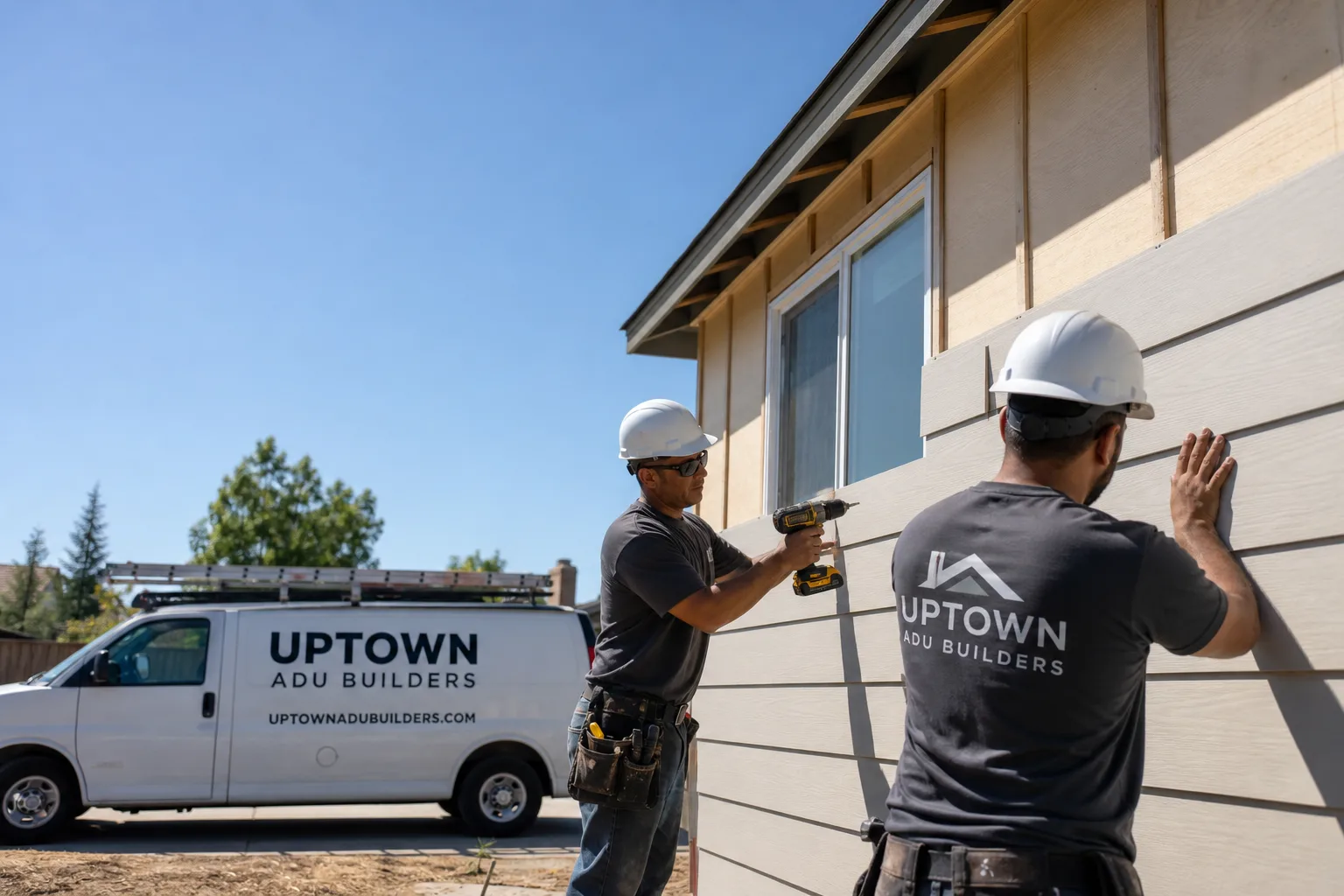
Fast, Reliable ADU Builders Across Crestline
Adding an ADU in Crestline means building on mountain terrain, often on septic, almost always under HOA or county slope review. A detached ADU here typically runs $180,000 to $320,000 depending on site work, foundation type, and finish level. Prefab options from brands like Abodu and Cover can tighten that timeline, but the lot still dictates the plan. Alan Drescher and our team at Uptown ADU Builders know Crestline’s lots, roads, and review boards. Call (877) 752-4191 to talk through your site before you commit to a floor plan.
Why Uptown ADU Builders Is Crestline’s Preferred ADU Builders Company
Crestline homeowners don’t need a general contractor who occasionally builds an ADU. They need someone who understands that a 4,600-foot elevation lot off a narrow private road near Lake Gregory presents different engineering questions than a flat tract in the valley. That’s the work we focus on. Our ADU Builders team has navigated the two-front approval that newer Crestline subdivisions demand: the county’s slope, septic, and defensible-space review plus the HOA’s architectural committee. That’s not a side note here. It’s the whole job.
We’ve worked in and around the 92325 zip code enough to know that every Crestline lot writes its own rules. Some need pier-and-grade-beam foundations. Some need septic-load documentation before the county will even look at a building permit. Some need James Hardie fiber-cement exteriors just to pass the design review. Alan Drescher leads every project with that reality in mind, and it’s why Crestline homeowners call us when their first quote falls apart in plan check.
ADU Contractor in Crestline
An ADU Contractor in Crestline is the licensed party responsible for turning a mountain lot into a permitted, livable second unit. That means coordinating slope-stability evaluation, septic capacity confirmation, foundation design, prefab delivery or stick-framing, and all interior finishes. Crestline homeowners typically need this when they’ve confirmed their lot can legally support a second dwelling and they want one accountable team from soil test to final inspection. Detached ADU construction here runs $180,000 to $320,000; site work on steep lots can add $25,000 to $60,000 before framing ever starts.
Slope, Septic, and Access Coordination
Before a single wall goes up, the site has to prove it can handle the unit. That means geotechnical input on slope stability, a septic system evaluation for the added bedroom load, and a driveway plan that gives emergency vehicles room to turn around. Crestline’s narrow, steep private roads make that last item more than a courtesy. It’s often the reason a permit stalls. We handle all three as one scope, so the county sees a complete package on the first submittal.
Newer Subdivision Warranty Protection
Crestline’s newer homes sit in subdivisions with CC&Rs and active architectural review. Adding an ADU to one of those lots is a two-front approval, not a simple county permit. The original builder’s warranty has alteration clauses that can void coverage if you touch structural elements, windows, siding, or trim without documentation. We map the warranty’s terms before we design, and we document every alteration so the original coverage on the main house stays intact.
ADU Design in Crestline
ADU Design in Crestline is where the brand decision, the lot constraints, and the budget actually meet. A Crestline homeowner needs design work before buying a prefab or signing a construction contract, because the design has to answer for snow load, fire-resistant materials, septic capacity, and HOA review standards all at once. Design fees here run $8,000 to $18,000 for a full permit set, depending on whether you’re working from a manufacturer’s base plan or starting custom. That’s the step that saves you from buying a unit the lot can’t legally accept.
Prefab Platform Selection for Mountain Lots
Not every prefab brand suits a Crestline site. Abodu and Cover both produce units that can work on engineered pier foundations, which matters when you’re building over grade changes near Lake Gregory. Dvele’s panelized system offers design flexibility for irregular lots. We match the brand to the site rather than forcing a floor plan onto terrain that won’t cooperate. That brand-agnostic approach is the whole point of working with an ADU specialist instead of a manufacturer’s sales rep.
HOA Submittal and Design Review
If your Crestline home is in a newer subdivision, the HOA’s design committee will review the ADU’s roofline, exterior materials, and siting before the county even looks at structural plans. A rejected submittal resets your timeline by weeks. We prepare the HOA package in parallel with the county permit set, using James Hardie siding and trim details that satisfy design-review preferences for fire-resistant, low-maintenance exteriors. One team prepares both submittals so they don’t contradict each other.
Trusted Brands We Service in Crestline
We work with Abodu, Cover, and Dvele among our prefab partners, and we use James Hardie fiber-cement products for exteriors that have to survive Crestline winters and fire seasons. Because our team is ADU-dedicated, we know the lead times, the foundation requirements, and the finish options for each brand before we recommend it. That means Crestline customers aren’t waiting on a learning curve. The right prefab for your lot, your budget, and your goals is a decision we make together after the site tells us what it can support.
Common ADU Builders Problems We See in Crestline Homes
- Building on the original slab without a geotech review. Newer Crestline tract homes often tie slabs and grading into shared retaining walls. Adding a detached ADU without checking that interface can destabilize drainage and void the builder’s structural warranty. We document the existing conditions before we design.
- Specifying valley-grade materials for a 4,600-foot site. Snow load, freeze-thaw cycles, and high-fire-hazard rules require snow-rated roofs, protected plumbing, and fire-resistant exteriors. Standard valley specs fail Crestline inspection and HOA review. James Hardie fiber-cement siding and proper roof assemblies solve both.
- Ignoring septic capacity until the plan is already drawn. A Crestline cabin or newer mountain home on septic may not have capacity for an added bedroom without system upgrades. The county won’t issue a permit on a promise. We run the septic-load review before you spend money on a floor plan.
- Underestimating driveway and turnaround requirements. Narrow, private mountain roads with limited turnarounds mean the ADU’s access design can stop a permit. Emergency-vehicle clearance is a county requirement, not a suggestion. We design the approach as part of the site plan, not an afterthought.
Pricing for ADU Builders in Crestline, CA
A detached custom ADU in Crestline runs $180,000 to $320,000. Prefab units from Abodu or Cover typically land between $160,000 and $280,000 including site work, foundation, and delivery. Studio ADUs run $140,000 to $220,000. Site-specific costs on Crestline lots add real line items: slope-stability geotech runs $3,000 to $8,000, septic system evaluation and possible upgrades run $5,000 to $25,000, and defensive-space clearing plus fire-resistant exterior upgrades run $8,000 to $20,000. If your home is in a newer HOA subdivision, budget $1,500 to $4,000 for architectural submittal support and documentation. Call (877) 752-4191 for a free estimate with a line-item breakdown before you commit.
We Also Serve Cities Near Crestline
Our ADU Builders in Crestline work regularly takes us down the mountain to Lake Arrowhead, Muscoy, San Bernardino, and Highland. The terrain changes, but the approach doesn’t: read the lot first, then design the unit. If you’re in the 92325 area or a neighboring community, call us for a free site conversation.
Serving Crestline, CA — Our Local Coverage Area
We’re based in the Crestline area and know this community well. Use the map below to see our service coverage — if you’re nearby, we can almost certainly help.
FAQs About ADU Builders in Crestline
It can, if you touch structural elements, windows, siding, or trim without documenting the alteration and checking the warranty’s alteration clause. Many Crestline subdivision warranties require written notice before any structural modification. We review the warranty terms before design, document everything, and prepare a file your builder’s warranty department can accept. Call (877) 752-4191 to have your warranty reviewed at the free estimate.
Most Crestline HOAs in newer subdivisions will approve a detached ADU if the submittal meets their design-review standards for roofline, materials, and siting. The rejection risk comes from valley-grade spec sheets and missing documentation. We prepare the HOA package alongside the county permit set so both reviews see the same compliant design. If your HOA has flagged a prior submittal, call us. We’ll review what was rejected and why.
Start with the exterior envelope: builder-grade siding, trim, and windows are the first things that fail under Crestline’s snow, freeze-thaw, and sun exposure. Replacing them with James Hardie fiber-cement siding and properly flashed windows before winter protects the ADU and the main house. Interior builder-grade finishes inside the ADU can stay as-is if the budget is tight; the exterior is where Crestline’s climate does the damage. Alan Drescher can walk your lot and tell you what’s urgent and what can wait.
Only a septic system evaluation can answer that, because Crestline lots on septic are sized for the original dwelling’s bedroom count. Adding an ADU with a full bath and bedroom increases the hydraulic load the system must handle. If the existing septic can’t absorb it, you’ll need a system upgrade or a different ADU configuration. We run this review before you buy a prefab or sign a build contract, so you’re not out money on a plan the county won’t approve.
James Hardie fiber-cement siding and trim are the strongest fit for Crestline’s climate: they resist moisture, impact, and ignition far better than wood or vinyl. Snow-load-rated roof assemblies and freeze-protected plumbing are non-negotiable at 4,600 feet. For fire hazard severity zones, non-combustible or ignition-resistant materials are generally required. We design exteriors to meet both the county’s fire standards and the HOA’s aesthetic guidelines on the same submittal.
Written by Alan Drescher, Owner at Uptown ADU Builders, serving Crestline mountain lots and subdivisions.